
how much does an electric bike cost in 2026?

I’ve spent the last 13 years living and breathing electric bikes. From stripping down motors in my garage to battling rush-hour chaos in Los Angeles and navigating rain-soaked gravel trails in the Pacific Northwest, I’ve put hundreds of ebikes through the wringer.
After all that dirt, grease, and thousands of miles, there’s one question that hits my inbox more than anything else:
"How much does an electric bike actually cost?"
"it depends on how you ride, where you ride, and what compromises you’re willing to accept."
Electric bike prices in 2026 range from a few hundred dollars to well over $5,000. But those numbers alone don’t tell you whether a bike will feel underpowered on hills, fall apart after two seasons, or quietly replace half your car trips.
This guide is written for adult riders in the U.S. and Canada who want a clear, experience-based breakdown of ebike cost, not marketing claims or spec-sheet hype.
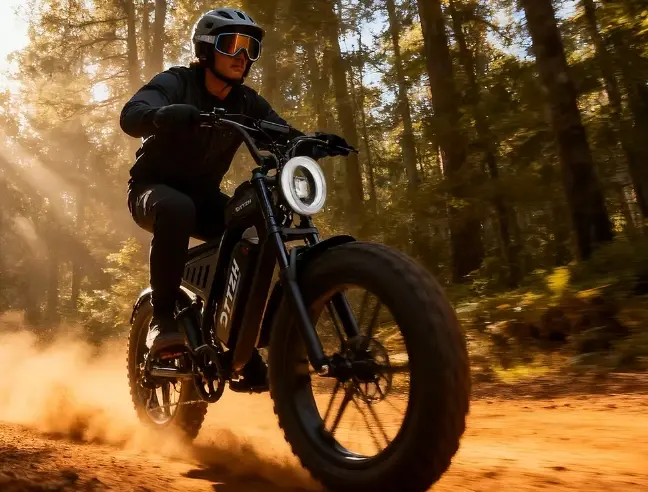
How Much Does an Electric Bike Cost in 2026?
Most electric bikes for adults in North America fall into four realistic price bands:
$600–$1,000 → Entry-level / budget electric bikes
$1,000–$2,000 → Mid-range ebikes (the best value for most riders)
$2,000–$4,000 → Premium and performance-focused models
$4,000+ → High-end specialty ebikes
If you’re asking “how much are electric bikes really?”, my experience says this: Most adult riders are best served by an electric bike priced between $1,200 and $1,800.
That range delivers meaningful torque, usable battery capacity, and reliable components without paying for diminishing returns.
Why Electric Bike Prices Vary So Much?
From the outside, two ebikes can look nearly identical yet differ by $1,000 or more. After years of testing, I’ve learned the price gap usually comes down to three things buyers underestimate:
Torque delivery, not wattage
Battery quality and longevity
Frame stiffness, brakes, and ride tuning
Those factors don’t show up clearly on product pages—but you feel them every mile.The longer you ride, the more pronounced the sensation becomes.
Electric Bike Price Ranges Explained (By Budget Tier)
Entry-Level Electric Bikes ($600–$1,000)
This is where most “cheap electric bikes” live—and where expectations matter most.
Typical characteristics:
350W–500W hub motors
Smaller batteries (360–480Wh)
Mechanical disc brakes
Cadence-based pedal assist
Basic frames and components
On flat terrain, these bikes can work. I’ve ridden plenty of budget electric bikes that are fine for short trips or casual weekend riding. But under load—steep hills, heavier riders, stop-and-go traffic—the limitations become obvious quickly.
In real-world use, this tier often struggles with:
Slow acceleration
Weak hill climbing
Faster battery degradation
If your riding is occasional and flat, this price can make sense. For daily commutes or frequent riding on unpaved roads, this will disappoint you.
Mid-Range Electric Bikes ($1,000–$2,000)
This is the range I recommend most often—and where the best electric bikes for adults tend to land.
What improves at this level:
500W–750W motors with higher torque
Larger batteries (600–720Wh)
Hydraulic disc brakes
Better tires (fat tire electric bike options appear here)
Stronger frames and more stable geometry
From an editorial standpoint, the mid-range ebike price delivers the best balance of performance, reliability, and ownership cost. These bikes feel confident in traffic, manageable on hills, and durable enough for multi-year use.
If you’re replacing car trips, riding several times a week, or carrying gear, this category offers the fewest compromises.
Premium & Performance Electric Bikes ($2,000–$4,000+)
This is where price increases reflect ride quality, not just branding.
Common upgrades include:
High-torque motors (75–90Nm+)
Torque sensors instead of cadence sensors
Advanced suspension systems
Reinforced frames for higher speeds
Higher-grade battery cells
For riders who care deeply about handling, hill performance, or long-term durability, premium ebikes make sense. For casual riders, the benefits can be subtle.
High-End & Specialty Electric Bikes ($4,000+)
This tier is designed for riders with very specific performance or durability needs, rather than general-purpose commuting.
What defines this level:
Premium mid-drive motor systems with refined torque delivery
Advanced suspension and purpose-built frame geometry
High-end braking and drivetrain components
Integrated software, displays, and system-level tuning
From a real-world perspective, the high-end ebike price pays for ride refinement, long-term durability, and specialized performance—not basic transportation. These bikes excel under heavy use, high speeds, or demanding terrain, but offer diminishing returns for casual riders.
If you ride daily, carry heavy loads, tackle technical trails, or are fully replacing a car, this category can make sense. For most adult riders, however, the added cost exceeds the practical benefit.
What Really Drives Ebike Cost?
Motor Power vs Torque: Why Nm Matters More Than Watts?
One of the biggest pricing myths is that higher wattage equals better performance.
In practice, torque determines how an electric bike feels—especially at low speeds, on hills, and in traffic. A 750W motor with 85Nm of torque often feels stronger than a higher-watt motor with poor tuning.
This is why torque vs cost is a more meaningful comparison than wattage alone.
Battery Cost: Capacity, Cells, and Replacement Reality
Battery quality is a major driver of electric bike price.
Higher-end batteries use:
Better cell chemistry (LG, Samsung)
Smarter battery management systems
Slower long-term degradation
A cheap battery may save money upfront, but ebike battery replacement cost—often $400–$700—can erase those savings later.
Frame Design, Brakes, and Ride Stability
Frame stiffness, brake modulation, and geometry tuning don’t look exciting on paper, but they matter when descending at 28 mph or braking in traffic.
This is where premium and mid-range bikes quietly separate themselves from budget models.
Hidden Costs of Buying an Electric Bicycle
After years of long-term testing and ownership tracking, I’ve found that the true cost of an electric bike rarely ends at the checkout page. Even experienced cyclists often underestimate how ownership expenses accumulate over time—especially with higher-speed, heavier ebikes.
Below are the four most common hidden costs that materially affect long-term electric bike ownership.
Battery Replacement After 3–5 Years
The battery is the single most expensive wear item on an electric bike.
In real-world use, most ebike batteries begin to show noticeable capacity loss after 3 to 5 years, depending on:
Charge frequency
Storage conditions
Cell quality (generic vs branded cells)
From my experience, replacement costs typically range from $400 to $900, depending on voltage, capacity, and whether proprietary housings are involved. Cheaper electric bikes often use lower-grade cells, which may degrade faster and lose range well before the bike itself wears out.
This is why electric bike battery cost should be considered upfront—especially for riders who commute regularly or rely on throttle-heavy riding.
Brake Pad and Rotor Upgrades
Electric bikes are heavier and faster than traditional bicycles, which places significantly more stress on braking systems.
On many budget and mid-range ebikes, stock brake pads and rotors are serviceable—but not ideal for long-term use. I routinely see riders upgrade to:
Higher-quality brake pads for better heat resistance
Larger or thicker rotors for improved stopping power
Over time, expect to spend $80–$200 on brake-related upgrades or replacements, particularly on Class 3 ebikes or cargo models. Ignoring brake wear is one of the most common—and dangerous—mistakes new ebike owners make.
Tire Replacements (Especially Fat Tires)
Tires wear faster on electric bikes due to:
Increased weight
Higher sustained speeds
Stronger acceleration forces
This is especially true for fat tire electric bikes, where replacement tires can cost $70–$120 per tire. Many stock tires prioritize cost over puncture resistance, leading to frequent flats in urban environments.
In my testing, upgrading to higher-quality, puncture-resistant tires significantly improves reliability but adds to overall ownership cost.
Accessories: Locks, Racks, Lights, and More
Few electric bikes are truly “ready to ride” out of the box.
Most adult riders end up purchasing:
A high-quality lock ($80–$150)
Rear racks or cargo solutions ($50–$200)
Upgraded lights for night riding
Phone mounts, mirrors, or fenders
These accessories are not optional for daily commuters, and together they can add $200–$400 to the total cost of ownership.
Why These Costs Matter?
A cheap electric bike can quickly lose its price advantage if parts fail early or upgrades become necessary for safety and reliability. Over several years, electric bike maintenance cost often rivals the difference between a budget and a mid-range ebike.
From a long-term perspective, factoring in these hidden costs leads to smarter buying decisions—and fewer regrets down the road.
Are Electric Bikes for Adults Worth the Price?
In nearly every long-term comparison I’ve done, ebikes outperform cars and public transit for short-to-medium trips.
Fuel savings, parking savings, and time efficiency add up quickly—especially in cities. From a rational standpoint, a well-chosen ebike often pays for itself within 12–24 months of regular use.
When comparing electric bike cost vs gas savings, the math is surprisingly clear.
How to Choose the Right Electric Bike Based on Budget?
$800–$1,000: Buy only if terrain is flat and expectations are modest.
$1,000–$2,000: Best value zone. Prioritize torque and battery size.
$2,000–$4,000: Choose based on ride feel, suspension, and reliability.
$4,000+: Worth it only if you need specific performance or durability benefits.
In fact, spending more time searching can help you find electric bikes with excellent value for money. Among the options available, DTTZH A12 folding ebike and F6 moped-style eBike offer the best value. There are even more high-value electric bikes waiting to be discovered.
A12 Folding E-Bike — The Urban Commuter's Portable Choice
Powerful and Responsive: Equipped with a 1,000W motor (optional 2,000W peak), it delivers agile acceleration, more than sufficient for city traffic.
Exceptional Real-World Range: The standard battery offers approximately 21-32 miles in pure electric mode and 60–80 miles with pedal-assist (depending on battery specifications).
Reasonable Top Speed: Reaches higher speeds (approx. 28–40 MPH on select configurations), suitable for daily commutes and brisk rides.
Lightweight and Foldable: Weighs about 28.5kg (64 lbs), folds in 3 seconds, ideal for apartment storage or car trunks.
Braking & Safety Features: Standard mechanical disc brakes, front/rear suspension, and integrated lights enhance everyday riding safety.
Affordable pricing: Promotional prices range from $379–$579 (significantly lower than many folding e-bikes).
Balancing compact size with urban commuting needs, the A12 offers a solid combination of power, range, and portability, making it a high-value choice among folding e-bikes.
F6 Motorcycle-Style E-Bike — A Large Bike Combining Performance and Range
Robust Power Range: Offers 1,500–5,000W motor options for users seeking stronger acceleration or a “motorcycle-like” experience.
Impressive Range: Pure electric range reaches approximately 21–40 miles depending on battery capacity, extending to 60–90 miles in pedal-assist mode.
High Speed Potential: Capable of reaching up to 33–50 MPH, suitable for long-distance commutes or light off-road terrain.
Robust Build: Features 20×4-inch fat tires, Shimano 7-speed shifting, front suspension fork, and wide tires for excellent traction.
Load Capacity & Weight: Maximum load capacity of approximately 200kg, with a total bike weight of 34kg, delivering solid performance in its class.
Significant price advantage: Promotional price around $699~$1,299, more competitive than many e-bikes with comparable power.
F6 moped style eBike offers a well-balanced combination of power, range, and features, catering to both urban commuting and light off-road needs. It delivers outstanding value within the $1,000 price range.
Core reasons for high value :
Power and speed match daily needs — A12 excels at quick urban starts and short trips, while the F6 offers more power for diverse scenarios.
High range efficiency — Both models deliver longer range than similarly priced competitors with reasonable battery capacity.
Superior Price-to-Spec Ratio — Priced below comparable models from many brands without compromising core performance.
Comprehensive Braking & Safety Systems — Standard disc brakes, suspension, and lighting enhance real-world riding experience and safety.
Versatile Applicability — Foldable convenience (A12) and fat-tire multi-terrain capability (F6) cater to distinct riding needs.
Common Electric Bike Price Myths
“Higher wattage always means faster” — Not true
“All batteries last the same” — Definitely not
“Folding bikes should be cheap” — Stability costs money
Understanding these myths helps buyers avoid regret.
Based on my years of experience, one conclusion remains consistent:
The best electric bike isn’t the cheapest or the most expensive—it’s the one that matches how you actually ride.
Understanding electric bike price structures allows you to buy once, buy smart, and ride longer without frustration.
FAQS
What is the average price of an electric bike?
Prices range widely in 2026. Entry-level models start around $600–$1,000. Mid-range bikes—the sweet spot for most riders—run $1,200–$2,500. Premium and high-performance options go $2,500–$6,000+, with top-tier specialty bikes exceeding that.
How much does it cost to run an electric bike?
Very little. Charging costs pennies per full charge (often under $0.50). Maintenance is simple and cheap—mostly tires, brakes, and occasional chain service. Overall, it’s a fraction of what you’d spend fueling a car or motorcycle.
Is it worth getting an electric bike?
Absolutely, for most city commuters and casual riders. E-bikes cut commute time, reduce effort (no more arriving sweaty), and provide light exercise when you want it. They’re a smart, fun investment that often pays for itself in gas and parking savings.
How long do e-bikes last?
A quality e-bike lasts 5–10 years with regular care. Premium models can go longer; budget ones may only manage 3–5 years. Batteries typically need replacing every 3–5 years. Lifespan depends on component quality, maintenance, and how hard you ride.
How much does it cost to replace an e-bike battery?
Expect $500–$1,200 for a good replacement. Smaller 400–500Wh batteries run $500–$800; larger 700–1,000Wh packs cost $900–$1,200. Third-party options can save money but risk compatibility issues and may void warranties.
Are cheap electric bikes worth it?
They can be—for flat terrain, light use, and low expectations. Under $1,000 models work for occasional rides, but daily commuters are better off spending $1,500–$2,500 on mid-range bikes for reliability, better parts, and longer life. Cheap bikes often cut corners on batteries, motors, and support.
What is the best time of year to buy an e-bike?
Late fall through winter (November–February) usually brings the deepest discounts as retailers clear inventory. Black Friday and end-of-year sales can knock 20–30% off last year’s models—which perform identically to new ones. Prices rise in spring/summer with demand.
Ready to Find Your Perfect Commuter E-Bike?
Smart buying goes beyond the sticker price. Focus on torque, battery quality, warranty, parts availability, and real-world support. A dependable mid-range bike will save you money and headaches for years—while a rock-bottom deal can end up costing more in the long run.


Comments