
Street Legal Electric Bikes: 5 Best Picks for 2026

If you’re shopping for a street legal electric bike, don’t start with the highest speed number on the product page. A bike advertised at 40 or 50 mph may be capable of much more than you can legally use on public roads.
This distinction is becoming harder for buyers to ignore in 2026. California has stepped up enforcement against vehicles marketed as eBikes when their speed or power falls outside the state's definition. New York and New Jersey have also added or clarified requirements that buyers need to understand before riding.
Quick Answer: A street legal electric bike is simply an eBike that meets the rules where you plan to ride. Those rules can cover its class, assisted speed, motor power, throttle, required equipment, labeling, and where the bike can be ridden.
For this guide, we focus on eBikes sold in configurations that fit common U.S. eBike classifications and are designed for everyday street use. Because eBike laws can differ by state, city, bike path, and trail, always check your local rules before riding.
Quick Picks: Best Street Legal Electric Bikes
Best Street Legal Moped-Style eBike: DTTZH F6
For riders who want a moped-style feel without stepping into motorcycle territory. The F6 combines a larger frame, fat tires, suspension, and throttle control in its Class 2 configuration.
Best Street Legal Commuter eBike: Aventon Level.3
For daily commuting and a more traditional bicycle feel. The Level.3 is the better fit if you care more about handling and pedal-assist efficiency than a moped-style frame.
Best Versatile Street eBike: Radster Trail
For riders who split their time between pavement and rougher surfaces. The Radster Trail gives you more flexibility than a typical city commuter.g.
Best Budget Street Legal Folding eBike: DTTZH A12
For commuters short on storage space. The folding frame makes the A12 easier to keep in an apartment, garage, or vehicle.
Best Value Fat-Tire eBike: Lectric XP4
For buyers who want fat tires and a throttle without spending heavily. The XP4 keeps things simple with a Class 2 setup out of the box.
Quick Comparison: Best Street Legal Electric Bikes
Electric Bike | Price | Class | Top Speed | Motor | Battery | Range | Throttle | Best For |
DTTZH F6 | $649 | Class 2 | 20 mph | 750W rated / 1500W peak | 48V 15Ah / 720Wh | Up to 60 miles PAS | Yes | Moped-style commuting |
Aventon Level.3 | $1,649 | Class 2 | 20 mph | 500W sustained / 864W peak | 36V 20Ah / 733Wh | Up to 60 miles | Yes | Daily commuting |
Radster Trail | $1,999 | Class 2 / Class 3 | 20–28 mph | 750W | 48V 15Ah / 720Wh | 25-65 miles | Yes | Street + mixed terrain |
DTTZH A12 | $369 | Class 2 | 20 mph | 750W rated | 48V 15Ah / 720Wh | Up to 80 miles PAS | Yes | Budget folding |
Lectric XP4 | $999 | Class 2 | 20 mph | 1029W peak | 48V 17.5Ah / 500Wh | Up to 85 miles PAS | Yes | Fat-tire value |
*Configuration and local legality should be verified before purchase or riding. DTTZH's higher-speed F6S, F6 Pro and A12S variants should not automatically be treated as street-legal eBike configurations.
DTTZH F6 — Best Street Legal Moped-Style Electric Bike

Best for: Adults who want a moped-style electric bike with a comfortable riding position, fat tires, and useful everyday power.
The F6 makes more sense for riders who want the feel of a small moped without buying a motorcycle. The upright position, 20-inch fat tires, and full suspension give it a noticeably different ride from a conventional commuter eBike.
For a street legal electric bike, the key is the exact configuration being sold and used, rather than the F6 platform's maximum potential. Buyers should verify the bike's class, maximum assisted speed, motor rating, throttle behavior, labeling, and local requirements before riding on public roads.
Street-legal note: The Class 2 configuration is the relevant setup for this comparison. Check the label and local requirements before riding.
Why choose it: The F6 is worth considering if comfort and a moped-style riding position matter more to you than maximum speed.
Important: The F6 is sold in multiple performance configurations. The street-legal positioning in this article applies only to the appropriate lower-speed configuration, not automatically to the 40 mph or 50 mph variants. Always verify the configuration and local requirements before riding on public roads.
Want a Closer Look?
Check out the DTTZH F6 and choose the configuration that fits your ride.
[View F6 →]
Aventon Level.3 — Best Street Legal Commuter eBike

Best for: Riders who want a conventional commuter eBike with a more refined ride and Class 3 capability.
The Aventon Level.3 sits closer to the traditional commuter-bike end of the market. It is designed for riders who care about getting to work efficiently rather than looking for a motorcycle-style riding experience.
Aventon describes Class 3 eBikes as pedal-assist bikes capable of reaching up to 28 mph, while Class 1 and Class 2 eBikes are limited to 20 mph under the standard classification framework.
That distinction matters when shopping for a street legal commuter eBike. A Class 3 bike can be useful for longer commutes, but local rules may restrict where Class 3 eBikes can be ridden.
The Level series is particularly appealing if you want a more natural bicycle feel, torque-sensing assistance, and a commuter-oriented design rather than a heavy fat-tire frame. Aventon also emphasizes its broad retail and service network, which can matter if you prefer buying from a brand with physical bike-shop support.
For legal street use: Confirm that Class 3 eBikes are allowed on the roads and paths you use.
Why choose it: A strong choice for riders who prioritize commuting efficiency, traditional handling, and a higher legal assist speed where Class 3 is permitted.
Radster Trail — Best Versatile Street-to-Trail Option
Best for: Riders who want a street-oriented eBike that can also handle rough pavement, gravel, and light trail riding.
The Radster Trail is one of the more versatile options in this group. It uses a 750W rated rear hub motor, produces up to 100 Nm of torque, and offers an estimated range of 25–65 miles. It also has hydraulic disc brakes, a torque sensor, integrated lighting, and a 720Wh battery with UL 2271 certification.
The important part for a street legal electric bike buyer is how the bike is set up for public-road use.
When comparing the Radster Trail, look at the class you will actually use—not its highest advertised speed.
Before riding: Make sure the bike is set to the class permitted in your area.
Why choose it: It gives you flexibility, strong hill-climbing performance, and enough tire and suspension capability for riders who do more than simple paved-road commuting.
DTTZH A12 — Best Budget Street Legal Folding eBike

Best for: Budget-conscious commuters, students, and riders who need a compact eBike that is easier to store or transport.
The DTTZH A12 takes a different approach from the F6. Instead of a large moped-style frame, it uses a compact folding design intended for urban transportation and easier storage.
The A12 uses a 750W rated motor and a 48V 15Ah battery. DTTZH lists the A12 at around 28 mph in its broader product lineup, but its FAQ states that DTTZH eBikes such as the F6 and A12 can ship in Class 2 configuration with throttle assistance up to 20 mph.
For this reason, buyers searching for a street legal folding electric bike should focus on the standard street-use configuration rather than the bike's maximum unlocked speed.
The folding design is the biggest selling point. It can make the A12 easier to store in a small apartment, garage, or vehicle, and it can work well for commuters who combine eBike riding with driving or public transportation.
For this comparison: Use the Class 2 configuration rather than the higher-speed setup.
Why choose it: If your priority is an affordable, compact, street-oriented eBike rather than maximum speed, the A12 offers a practical starting point.
It is also one of the more interesting options for shoppers searching for a cheap street legal electric bike or an electric bike under $500, depending on current pricing and promotions.
Looking for a Budget-Friendly Ride?
See what the DTTZH A12 has to offer.
[View A12 →]
Lectric XP4 — Best Value Fat-Tire Street eBike
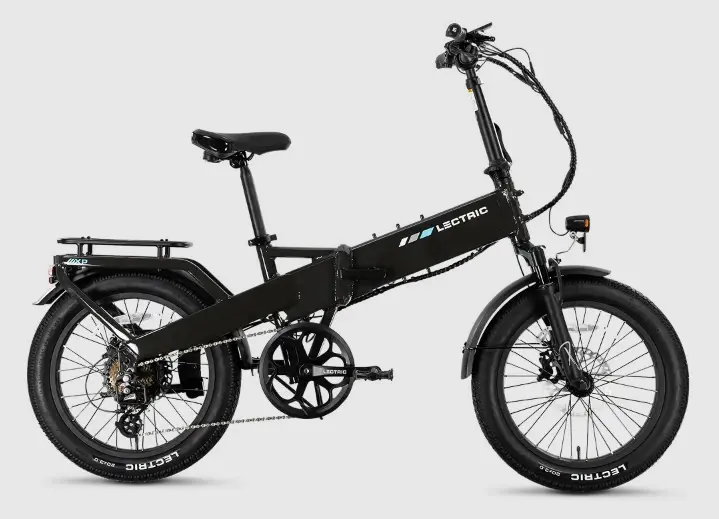
Best for: Riders who want fat tires, throttle control, folding-friendly practicality, and strong value.
Lectric is one of the most recognizable direct-to-consumer eBike brands in the U.S., and the XP4 is a natural model to consider when comparing street legal electric bikes.
Lectric states that its eBikes ship as Class 2, meaning the throttle can propel the bike up to 20 mph. The company also says the XP4 can be unlocked for Class 3 pedal-assist speeds of up to 28 mph, while the throttle remains limited to 20 mph.
That makes the XP4 another useful example of the difference between a bike's maximum capability and its street-legal configuration.
If you live somewhere that permits Class 3 eBikes, the higher pedal-assist setting may be useful. If your local rules are more restrictive, you can keep the bike in its Class 2 configuration.
The fat-tire design also gives the XP4 more versatility than a lightweight urban eBike. It can handle rough pavement, gravel, and other surfaces that may be less comfortable on a narrow-tire commuter.
Keep in mind: Its Class 2 configuration is the straightforward option for public-road use where permitted.
Why choose it: It combines a widely recognized brand, fat-tire versatility, throttle control, and a Class 2 configuration at a relatively accessible price point.
What Makes an Electric Bike Street Legal?
The easiest way to check is to look at five things: class, assisted speed, motor power, throttle behavior, and required equipment.
In general, you should look at several factors together.
1. Class
Most U.S. eBikes fall into one of three classes:
Class 1: Pedal assist only, up to about 20 mph
Class 2: Pedal assist plus throttle, up to about 20 mph
Class 3: Higher-speed pedal assist, commonly up to 28 mph, although some states use different limits
The class matters because it can determine where the bike is allowed—not just how fast the motor can assist you.
A Class 1, Class 2, or Class 3 label does not guarantee that the bike can be ridden everywhere. State, city, bike-path, trail, and park rules can impose additional restrictions.
2. Electric-Assisted Speed
Speed is one of the first things regulators look at.
Under the common Class 1, Class 2, and Class 3 e-bike classifications, Class 1 and Class 2 eBikes generally provide assistance up to 20 mph, while Class 3 eBikes can provide pedal assistance up to 28 mph.
But individual states can define these limits differently.
For example, New York currently defines Class 3 eBikes with electric assistance stopping at 25 mph, not 28 mph.
3. Motor Power
Motor wattage matters, but it is not the only factor. There is no single U.S. motor-wattage rule that automatically makes an eBike street legal everywhere. Speed, classification, throttle behavior, labeling, required equipment, and local regulations can all matter.
New York, for example, currently requires eBike motors to be less than 750 watts and places eBikes into specific legal classifications.
4. Throttle
Throttle behavior is particularly important.
A Class 2 eBike generally allows the motor to propel the bike without pedaling, but the assisted speed is limited.
5. Required Equipment and Labels
Depending on where you ride, requirements may include:
Pedals
Brakes
Front and rear lights
Reflectors
A permanent classification label
Motor wattage information
Maximum assisted-speed information
California, for example, requires eBikes sold in the state to meet specific e-bike labeling requirements, including information about classification, maximum assisted speed, and motor wattage.
Class 1 vs. Class 2 vs. Class 3: Which Is Best for Street Riding?
Class | Motor Assistance | Throttle | Typical Maximum Assist | Best For |
Class 1 | Pedal assist only | No | 20 mph | Traditional cycling |
Class 2 | Pedal assist + throttle | Yes | 20 mph | City riding and commuting |
Class 3 | Pedal assist | Varies by law/model | 25–28 mph | Faster commuting |
For many riders, Class 2 is the simplest starting point. You get throttle control, pedal assist, and a 20 mph assisted-speed limit.
Class 3 makes more sense if you have a longer commute and want to maintain higher speeds with pedal assist. However, Class 3 access can be more restricted on certain bike paths and trails.
And remember: Class 3 does not automatically mean “better.” If your daily riding is mostly short urban trips, a Class 2 eBike may be easier to use and less complicated from a local-regulation standpoint.
Street Legal Doesn't Mean Legal Everywhere
This is where many buyers get tripped up.
A bike can meet the definition of an eBike and still be restricted on a particular trail, bike path, or road.
There is a difference between:
Public roads
Bike lanes
Sidewalks
Multi-use paths
State parks
Local trails
Private property
Local rules can be stricter than the general eBike classification system, so riders should check state-by-state e-bike laws before riding.
State | Key eBike Rule to Check |
California | Three-class system, assisted-speed limits, labeling, and equipment requirements |
New York | Class 3 eBikes are limited to 25 mph; local rules may also apply |
New Jersey | Additional licensing and registration requirements apply under 2026 rules |
California shows why the distinction matters. In April 2026, the California Attorney General warned that two-wheeled vehicles exceeding 28 mph with pedal assistance or 20 mph with throttle assistance may be treated as mopeds or motorcycles rather than eBikes under California law. For more details, see California e-bike legal requirements.
The state also warns that modifying an eBike beyond applicable limits can change its legal classification.
New York e-bike laws limit Class 3 eBikes to 25 mph, while cities and local governments may impose additional rules on where and how they can be ridden.
New Jersey is another reminder that state requirements can go beyond classification. Starting June 26, 2026, New Jersey began implementing e-bike licensing and registration requirements under a new law.
So before buying a road legal electric bike, check the rules where you actually plan to ride—not just the specifications on the product page.
How to Choose a Street Legal Electric Bike
If legality is one of your priorities, use this checklist before comparing battery size or motor torque.
Before comparing motor power, battery size, or top speed, check these six things:
1. Start With Your State and City
Find out which eBike classes are allowed where you live.
2. Check the Bike's Actual Configuration
Don't rely only on the highest advertised speed.
A bike advertised as “40 mph” may have a lower-speed configuration that fits an eBike classification, but the 40 mph setting itself may not be legal for public-road eBike use.
3. Check the Throttle
If you want throttle control, confirm its maximum assisted speed.
4. Look at Rated Motor Power
Don't confuse rated power with peak output. A product may advertise a much higher peak number than its continuous or rated motor output.
5. Check the Label and Documentation
A serious street-use eBike should have clear information about its class, speed, motor, and safety specifications.
6. Consider Certification and Safety
UL certification is not the same thing as street legality, but it is worth considering when comparing battery and electrical-system safety. Several mainstream manufacturers now highlight UL certification, including Aventon and Rad Power Bikes.
Are Street Legal Electric Bikes Worth Buying?
For many riders, yes—especially if the bike is primarily transportation rather than a recreational high-speed machine.
The biggest advantage is simple: you are buying a vehicle designed around a recognized eBike configuration instead of buying the fastest machine possible and figuring out the legal situation afterward.
That matters even more as states and cities pay closer attention to high-powered electric vehicles sold online.
A 40 or 50 mph electric bike may sound more exciting on paper, but if you cannot legally use that configuration on the roads you actually ride, the extra performance may not be useful.
For commuting, errands, school, and everyday transportation, a well-equipped 20–28 mph eBike can be the more practical choice.
FAQs
What is a street legal electric bike?
A street legal electric bike is an eBike that meets the speed, class, motor, equipment, labeling, and other requirements for public-road use in a specific jurisdiction. Because eBike laws vary by state and locality, a bike that is street legal in one area may not be legal in another.
Are electric bikes street legal in the U.S.?
Yes, many electric bikes are street legal in the U.S., but there is no single rule that applies nationwide. State and local laws determine which eBike classes, speeds, motor ratings, throttles, and riding locations are permitted.
What class eBike is street legal?
Class 1, Class 2, and Class 3 eBikes can all be street legal, depending on state and local laws. Class 1 and Class 2 generally assist up to 20 mph, while Class 3 commonly provides pedal assistance up to 28 mph, although some states use different limits.
Is a 750W eBike street legal?
Not automatically. Motor wattage is only one factor. California, New York, and other jurisdictions have specific requirements involving speed, class, power, throttle operation, labeling, and equipment. New York currently requires eBike motors to be under 750 watts.
Is a 28 mph eBike street legal?
It can be, but not everywhere. A 28 mph Class 3 eBike may fit the classification framework in some states, while other jurisdictions use lower limits or restrict Class 3 bikes in certain locations. New York, for example, limits Class 3 eBike assistance to 25 mph.
Do street legal electric bikes need a license?
Not usually for a standard Class 1 or Class 2 eBike, but requirements vary by state and vehicle classification. Some jurisdictions may impose licensing or registration requirements, particularly for higher-powered vehicles or eBikes that fall outside the standard eBike definition.
Can I ride a street legal eBike on a bike path?
Not necessarily. Being street legal for public roads does not automatically give an eBike access to every bike path, trail, or multi-use path. Access rules can depend on the eBike class and the specific state, city, park, or trail.
Can a 40 mph electric bike be street legal?
Not necessarily. A 40 mph electric bike may exceed the legal speed limits for an eBike in some jurisdictions and could instead be classified as a moped or motorcycle. A high-speed setting does not automatically make the bike street legal.
Are moped-style electric bikes street legal?
They can be, but appearance alone does not determine legal status. A moped-style electric bike must meet the applicable requirements for eBike classification, including speed, motor power, throttle operation, equipment, and labeling. If it exceeds those limits, it may be regulated as a moped or motorcycle instead.
Which Street Legal Electric Bike Is Right for You?
The best street legal electric bike is not necessarily the fastest one.
The most important distinction is between an eBike's advertised capability and the configuration that is actually legal to use on public roads.
Before buying, verify five things: class, assisted speed, motor rating, throttle behavior, and local riding rules.
For a moped-style ride, the DTTZH F6 is a strong option when used in its appropriate street-legal configuration. If you want an affordable folding bike, the DTTZH A12 offers a compact alternative. The Aventon Level.3 is a strong traditional commuter choice, while the Radster Trail brings more versatility for mixed surfaces. The Lectric XP4 stands out for riders who want fat tires, throttle control, and strong value.
The bigger takeaway is simple: check the configuration, not just the headline specs. A 750W motor, 28 mph capability, or even a throttle does not by itself answer whether an eBike is legal where you live.
As eBike regulations become more specific, choosing a bike that fits your local rules may be more valuable than simply choosing the one with the biggest motor or highest top speed.


Comments