
8 Things I Wish I Knew Before Buying a Moped Style eBike

What Every First-Time Buyer Should Know Before Spending Their Money
A year ago, I thought buying a moped style eBike would be simple.
I compared motor power, battery size, top speed, and range, assuming those numbers would tell me everything I needed to know.
They didn't.
After months of using one for commuting, grocery runs, weekend rides, and everyday errands, I realized the biggest surprises had very little to do with the specification sheet.
Nobody warned me how difficult it would be to lift into the back of my SUV.
Nobody explained why my real-world range could vary by more than 30 miles on the same bike.
Nobody mentioned how quickly accessories would add to the total cost of ownership.
And I definitely wasn't expecting complete strangers to ask about my bike almost every time I parked.
If you're shopping for your first moped style eBike, this isn't another article comparing motors or ranking brands.
Instead, it's a practical guide based on the lessons I learned after living with one.
Some of these lessons could save you money.
Others might help you avoid buying the wrong type of eBike altogether.
Quick Answer:What should you know before buying a moped style eBike?
Most first-time buyers focus on speed, power, and advertised range.
After owning one, I realized these eight factors had a much bigger impact on my overall experience.
They're much heavier than they look.
Advertised range rarely matches everyday riding.
Accessories can easily add several hundred dollars to your budget.
Parking and storage require more planning than expected.
Expect plenty of questions from curious strangers.
Not every trail or bike path allows every type of eBike.
Maintenance is simple, but it isn't maintenance-free.
Choosing the right style of eBike matters more than choosing the biggest motor.
If someone had shared these lessons with me before I bought mine, I probably would have made the same purchase—but I would have made it with much more realistic expectations.
Why This Guide Is Different
Most buying guides compare specifications.
They'll tell you which bike has the biggest motor, the highest top speed, or the longest advertised range.
That information is useful—but it's only part of the story.
What those guides rarely explain is what ownership actually feels like after six months.
The little inconveniences.
The unexpected costs.
The habits you develop.
And the features that end up mattering far more than you expected.
That's what this guide is about.
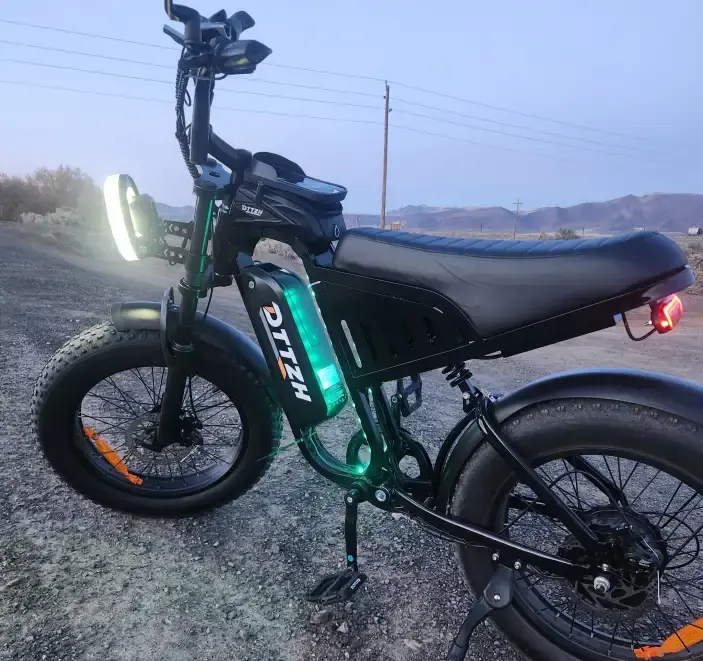
Whether you're considering the DTTZH F6, a Super73-style model, or another moped style eBike, the lessons below apply to almost every bike in this category.
Wish #1 — It's Much Heavier Than It Looks
Key Takeaway:The weight doesn't affect how the bike rides nearly as much as it affects everything before and after the ride.
The first time I truly noticed the weight wasn't while riding.
It was when I got home.
After an effortless ride across town, I needed to lift the bike over a small concrete step before rolling it into my garage. That was the moment I realized I wasn't just buying a bicycle—I was buying something that weighed close to a small motorcycle.
Most moped style eBikes weigh between 80 and well over 100 pounds, depending on the battery, suspension, and frame design.
While riding, that weight actually works in your favor. It helps the bike feel stable at higher speeds and more planted on rough pavement.
The challenge starts whenever the motor isn't helping.
When Weight Really Matters
You'll notice the weight when you need to:
Load the bike into a truck or SUV
Lift it onto a hitch rack
Carry it through an apartment building
Turn it around inside a garage
Push it after the battery runs out
Move it through tight storage spaces
These situations don't happen every ride, but they become part of ownership.
Who Should Think Twice?
In my experience, riders who enjoy moped style eBikes usually have one thing in common—they rarely need to carry them.
They're ideal if you have:
A garage
Ground-floor storage
A driveway
A dedicated bike shed
They're much less convenient if you live in an upper-floor apartment or regularly combine cycling with public transportation.
The issue isn't riding the bike.
It's moving the bike.
Before You Buy
Instead of asking,
"How powerful is the motor?"
Ask yourself,
"Where will I store this bike every night?"
That simple question will probably have a bigger impact on your daily experience than another 250 watts of motor power or an extra 5 mph of top speed.
Wish #2 — Advertised Range Isn't Your Everyday Range
Key Takeaway:Shop for battery capacity—not marketing mileage.
One of the biggest mistakes I made was comparing bikes by their advertised range.
Some brands claimed 60 miles.
Others promised 80.
A few advertised well over 100 miles.
I assumed those numbers represented what I'd experience in everyday riding.
They didn't.
A few weeks after buying my bike, I took two rides on nearly the same route.
On the first ride, I stayed on bike paths, used low pedal assist, and rode at a relaxed pace.
The battery seemed to last forever.
A few days later, I rode in city traffic with frequent stops, steeper hills, stronger acceleration, and a backpack full of groceries.
The battery drained much faster.
Same bike.
Same rider.
Completely different result.
That experience completely changed how I evaluate range claims.
What Actually Affects Range?
Real-world range depends on far more than a single advertised number.
The biggest factors include:
Factor | Impact on Range |
Frequent throttle use | High |
Average riding speed | High |
Hills | High |
Rider and cargo weight | Moderate to High |
Tire pressure | Moderate |
Wind | Moderate |
Cold weather | Moderate to High |
Stop-and-go traffic | Moderate |
Pedal assist level | Significant |
Instead of asking,
"How many miles can this bike go?"
Ask,
"How will I actually ride it most of the time?"
That's the question that gives you a much more realistic expectation.
Compare Battery Capacity Instead
One habit I wish I'd learned earlier is to compare battery capacity (Wh) rather than advertised mileage.
Watt-hours measure how much energy a battery actually stores, making it a far more reliable way to compare different eBikes.
Two bikes might both advertise an 80-mile range, but the one with a larger battery will usually provide more reserve for hills, cargo, or higher speeds under similar riding conditions.
Once I started comparing batteries instead of marketing numbers, shopping became much easier.
Before You Buy
If range is important to you, ask yourself:
How often will I use the throttle?
Will I carry groceries or extra gear?
Are my routes mostly flat or hilly?
What's the battery capacity in watt-hours (Wh)?
Those answers are far more useful than any advertised maximum range.
Wish #3 — You'll Spend More on Accessories Than You Expect
Key Takeaway:The bike is only part of the investment. Plan another $200–$500 for accessories you'll likely buy within your first few months.
When I placed my order, I thought I knew exactly what the bike would cost.
I was wrong.
The bike arrived exactly as advertised, but it didn't take long before I started ordering accessories that quickly became part of everyday riding.
First came a quality helmet.
Then a stronger lock.
A phone mount.
A mirror.
A floor pump.
Later, I added a rear rack and a waterproof cargo bag for grocery runs.
None of these purchases felt optional once I started riding regularly. Each one made the bike safer, more practical, or simply more enjoyable to use.
Looking back, I didn't underestimate the price of the bike—I underestimated the cost of ownership.
Accessories Worth Budgeting For
If you're buying your first moped style eBike, these are the items I'd consider from day one.
Accessory | Why It Matters |
Certified helmet | Basic safety |
Heavy-duty U-lock | Theft protection |
Phone mount | Navigation |
Rear-view mirror | Better visibility |
Floor pump | Correct tire pressure |
Rear rack or cargo bag | Everyday errands |
Chain lubricant | Routine maintenance |
Flat repair kit | Emergency repairs |
Most of these aren't exciting purchases, but together they improve your ownership experience far more than a small increase in motor power or top speed.
The One Thing I'd Buy First
If I had to start over, I'd buy the lock before anything else.
Moped style eBikes attract attention. Their motorcycle-inspired appearance makes them stand out much more than a traditional commuter bike.
Unfortunately, that attention isn't always from people who simply admire it.
A quality lock costs far less than replacing an entire bike.
Budget Beyond the Purchase Price
It's also worth remembering that every eBike has ongoing operating costs.
Fortunately, they're relatively modest.
Typical Annual Expense | Estimated Cost |
Brake pads | $30–80 |
Tires | $80–180 |
Chain & drivetrain | $30–100 |
Professional tune-up (optional) | $80–150 |
Electricity | Usually under $100 |
Even with routine maintenance, the yearly cost of owning an eBike is still dramatically lower than owning a car for short daily trips.
Before You Buy
Create two separate budgets:
Bike Budget
Ownership Budget
The first gets you riding.
The second keeps you enjoying the bike long after the excitement of delivery day has passed.
Wish #4 — Parking Takes More Planning Than You Expect
Key Takeaway:Owning a moped style eBike means thinking about where you'll park it—not just where you'll ride it.
One of my first grocery trips taught me an unexpected lesson.
Getting there was easy.
Finding somewhere I felt comfortable leaving the bike wasn't.
Compared with a traditional bicycle, a moped style eBike is larger, heavier, and much more noticeable. That means parking becomes part of every ride.
Not Every Bike Rack Works
One thing I learned quickly is that public bike racks aren't always designed for fat tire bikes or moped-style frames.
Some racks are too narrow.
Others don't allow you to lock both the frame and a wheel securely.
Before visiting somewhere new, I now ask myself a few simple questions:
Is there a visible bike rack?
Is it in a well-lit area?
Can I securely lock the frame?
Will the bike remain in a busy location?
These questions take less than a minute but can save a lot of stress later.
Develop Good Locking Habits
Buying a strong lock is only part of the solution.
How you use it matters just as much.
Good habits include:
Lock the frame—not just a wheel.
Secure the bike to a fixed object.
Remove valuable accessories if possible.
Choose busy, well-lit locations.
Avoid leaving the bike overnight in public whenever possible.
These habits quickly become routine and significantly reduce risk.
Before You Buy
Think beyond your route.
Ask yourself:
"Where will I park when I get there?"
It's a question I never considered before buying—but now I ask it every time I ride.
Wish #5 — Be Ready to Answer Questions Everywhere
Key Takeaway:A moped style eBike attracts far more attention than most people expect.
This was probably the biggest surprise that had nothing to do with performance.
Within my first week of ownership, complete strangers started asking about the bike almost everywhere I stopped.
At coffee shops.
Outside grocery stores.
At traffic lights.
Even while I was locking it outside a convenience store.
The conversations were surprisingly similar.
"Is that electric?"
"How fast does it go?"
"Where did you buy it?"
"Do you need a license?"
At first, I found it unexpected.
Eventually, I realized it was simply part of owning a bike with motorcycle-inspired styling.
It Changes How People See eBikes
Unlike a standard commuter bike, a moped style eBike stands out.
The long seat, fat tires, and larger frame naturally draw attention.
That also means every ride becomes an opportunity to shape how others view eBikes.
I gradually became more conscious about:
Slowing down near pedestrians.
Following local trail rules.
Wearing a helmet.
Riding predictably in traffic.
Small actions leave lasting impressions, especially for people who may be considering their own first eBike.
Before You Buy
If you enjoy talking with people, you'll probably enjoy the attention.
If you prefer staying unnoticed, it's worth knowing that a moped style eBike is rarely anonymous.
Common Mistakes First-Time Buyers Make
Before moving on, here are a few mistakes I see new riders make over and over again.
❌ Buying Based Only on Top Speed
A faster bike isn't automatically a better bike.
Think about where you'll actually ride, not just how fast it can go.
❌ Ignoring Storage
Before comparing motors or batteries, decide where the bike will live.
A great eBike quickly becomes frustrating if it's difficult to store every day.
❌ Underestimating Accessory Costs
Most riders end up buying more than just the bike.
Budgeting for safety and convenience from the beginning helps avoid surprises later.
❌ Assuming Every Trail Allows Every eBike
Local regulations vary.
A quick check before buying can save months of frustration.
❌ Choosing the Wrong Category
Many buyers spend hours comparing brands when they should first decide which type of eBike best matches their lifestyle.
Sometimes the best decision isn't buying a bigger bike—it's buying a more practical one.
Wish #6 — Don't Assume You Can Ride Everywhere
Key Takeaway:The best ride is the one you can enjoy legally, safely, and confidently.
One assumption I made before buying my eBike was surprisingly simple:
If it's an eBike, I can ride it anywhere a regular bicycle goes.
Reality turned out to be more complicated.
Depending on where you live, access may vary based on state laws, city ordinances, park rules, or the specific trail you're using.
That doesn't mean a moped style eBike is difficult to own—it simply means it's worth spending a few minutes understanding where you'll ride most often.
Every Area Has Different Rules
Across the United States, many states use the familiar Class 1, Class 2, and Class 3 system.
However, local regulations can still differ.
For example, some multi-use trails welcome Class 1 and Class 2 eBikes but restrict higher-speed models.
Some parks have their own rules regardless of state law.
Others leave the decision to local land managers.
Instead of assuming every destination follows the same standards, I now check the rules before visiting a new trail or park.
It usually takes less than five minutes.
Plan Around Your Real Routes
Before buying, make a list of the places you expect to ride most often.
For example:
Daily commute
Grocery store
Local bike paths
Weekend trails
Parks and recreation areas
Then check whether there are any restrictions that could affect your riding.
Doing this before purchasing is much easier than discovering limitations afterward.
Before You Buy
Ask yourself one simple question:
"Where will I actually spend 90% of my riding time?"
The answer matters much more than whether a bike is capable of going faster than you'll ever need.
Wish #7 — An eBike Is Low Maintenance, Not No Maintenance
Key Takeaway:A few minutes of routine care can add years to your bike's life.
Before owning an eBike, I assumed maintenance would be almost nonexistent.
Compared with a car, that's mostly true.
Compared with a traditional bicycle, however, the same wear items still need attention.
The difference is that none of the maintenance is particularly difficult.
It's simply part of owning any bike you ride regularly.
What Should You Check?
Fortunately, the routine is simple.
Before Every Ride
✓ Tire pressure
✓ Brake function
✓ Battery level
✓ Lights
Once a Month
✓ Chain cleaning and lubrication
✓ Tire wear
✓ Bolt tightness
✓ General cleaning
Every Few Months
✓ Brake pad inspection
✓ Drivetrain wear
✓ Suspension inspection (if equipped)
✓ Professional tune-up if needed
None of these tasks take much time, but together they help keep the bike riding safely and efficiently.
Battery Care Matters Most
The battery is usually the most expensive single component on any eBike.
Fortunately, good habits are straightforward.
Try to:
Store the battery in moderate temperatures.
Use the charger recommended by the manufacturer.
Keep electrical connections clean.
Avoid leaving the battery completely discharged for long periods.
These simple habits can help maximize battery life over the long term.
Before You Buy
If you're willing to spend just a few minutes each month on basic maintenance, an eBike is one of the easiest vehicles you'll ever own.
Wish #8 — Choosing the Right Type of eBike Matters More Than Choosing the Right Brand
Key Takeaway:The best eBike isn't the one with the biggest motor—it's the one you'll enjoy riding every week.
This is probably the biggest lesson I learned.
Before buying, I spent hours comparing:
Motor wattage
Battery size
Top speed
Torque
Suspension
Those specifications all matter.
But they aren't where most buying decisions should begin.
Instead, start with a much simpler question.
"How will I actually use this bike?"
Everything else becomes easier once you know the answer.
A Moped Style eBike Is a Great Fit If...
You'll probably enjoy this category if your rides typically include:
Neighborhood roads
Longer commutes
Weekend cruising
Mixed pavement
Gravel paths
Everyday errands
The upright riding position, larger tires, and comfortable seating make these bikes especially enjoyable for longer rides.
It May Not Be the Best Choice If...
On the other hand, another style of eBike may suit you better if you:
Need to carry the bike upstairs.
Frequently combine riding with buses or trains.
Have limited storage space.
Want maximum portability.
Need a lightweight bike for daily lifting.
There's nothing wrong with choosing a folding or commuter eBike if it better matches your routine.
In fact, that's often the smarter decision.
Match the Bike to Your Lifestyle
Instead of asking:
"Which bike is the most powerful?"
Try asking:
Where will I ride?
Where will I store it?
How often will I carry it?
Do I value comfort or portability more?
How far do I usually travel?
Those answers narrow your choices much faster than comparing specification sheets.
Where the DTTZH F6 Fits
If your priorities include comfort, stability, and replacing short car trips, a full-size moped style eBike such as the DTTZH F6 is worth considering alongside similar models in the category.
Features like fat tires, full suspension, hydraulic disc brakes, and a larger battery are designed for riders who prioritize ride quality and longer distances rather than maximum portability.
At the same time, it isn't the ideal choice for every rider—and that's perfectly fine.
Choosing the right category will always have a greater impact on your ownership experience than choosing a specific brand.
Final Buyer's Checklist
Before placing your order, take two minutes to answer these questions.
Storage
☐ Do I have a convenient place to store the bike?
☐ Will I ever need to carry it upstairs?
Riding Style
☐ How far do I usually ride?
☐ Do I prefer comfort or portability?
☐ Will I mostly ride on streets, bike paths, or mixed terrain?
Budget
☐ Have I included accessories in my budget?
☐ Am I prepared for basic maintenance?
Local Regulations
☐ Have I checked the rules for the places I ride most often?
Expectations
☐ Am I buying the bike that fits my lifestyle rather than the one with the biggest numbers?
If you can answer "Yes" to most of these questions, you're much more likely to enjoy your purchase long after the excitement of delivery day has passed.
FAQs
Are moped-style eBikes good for daily commuting?
Yes, moped-style eBikes are excellent for daily commutes of 10–20 miles. They provide a comfortable riding position, stable handling, and ample battery capacity for suburban roads. However, if your commute involves public transit or carrying the bike up stairs, a lightweight or folding eBike is a better fit.
Are moped-style eBikes difficult to ride?
No, they are easy to ride. While heavier than traditional bicycles, their lower center of gravity increases stability and rider confidence. The main challenge is maneuvering and storing the bike when not in use, rather than riding it.
How much should I budget for eBike accessories?
Expect to spend $200–$500 on essential accessories in the first few months. To ensure safety and convenience, prioritize these items over performance upgrades:
Certified helmet & Quality lock
Phone mount & Rear-view mirror
Floor pump & Cargo rack/bag
Is a higher-powered eBike motor always better?
Not necessarily. While a larger motor offers faster acceleration and easier hill climbing, it adds weight and consumes more battery. The best eBike motor power depends on your weight, riding routes, travel distance, and local regulations.
How long does an eBike battery typically last?
A quality lithium-ion eBike battery lasts for several years of regular use. To maximize your eBike battery lifespan and maintain capacity, use the correct charger and avoid exposing the battery to extreme temperatures.
Who should buy a moped-style eBike? (Quick Guide)
Riding Scenario | Is it a Good Fit? | Recommendation |
Suburban commuting & short car trips | Excellent | Great long-term investment |
Weekend leisure & mixed pavement | Excellent | Offers stability and comfort |
Apartments with stairs / Limited space | Caution | Consider a folding or compact eBike |
Frequent train or bus commuting | Caution | A lightweight commuter bike is more practical |
Looking for a Comfortable Moped Style eBike?
If you've read this far and decided that a moped style eBike matches the way you actually ride, it's worth comparing several models before making your decision.
One option to consider is the DTTZH F6, a full-suspension fat tire eBike designed for riders who prioritize comfort, stability, and longer-distance capability over maximum portability.
Whether you choose the DTTZH F6 or another model, focus on the features that matter most for your daily routine—not simply the biggest numbers on a specification sheet.
Making the right choice today is far more valuable than chasing the highest top speed you'll rarely use.


Comments